
Signs worth discussing on the call
- A stain that returns after the surface dries
- Peeling paint, swollen baseboards or damp cabinetry
- Water sounds when fixtures and appliances are off
- Water use that remains unexplained after checking fixtures
These observations guide an investigation; they do not confirm the source by themselves.
Start with the pattern, not the stain
Where you see water is not always where it starts. Moisture can travel along a pipe, ceiling cavity or floor before becoming visible. Tell the specialist when the mark appeared, whether it grows after a shower, and whether it follows rain or air-conditioning use. These observations help define what needs testing.
Check accessible fixture connections visually without removing finishes. A running toilet or dripping connection may explain water use without a concealed pipe failure. If the evidence points below the floor, slab leak detection may be the more useful next step.
How concealed leaks are investigated
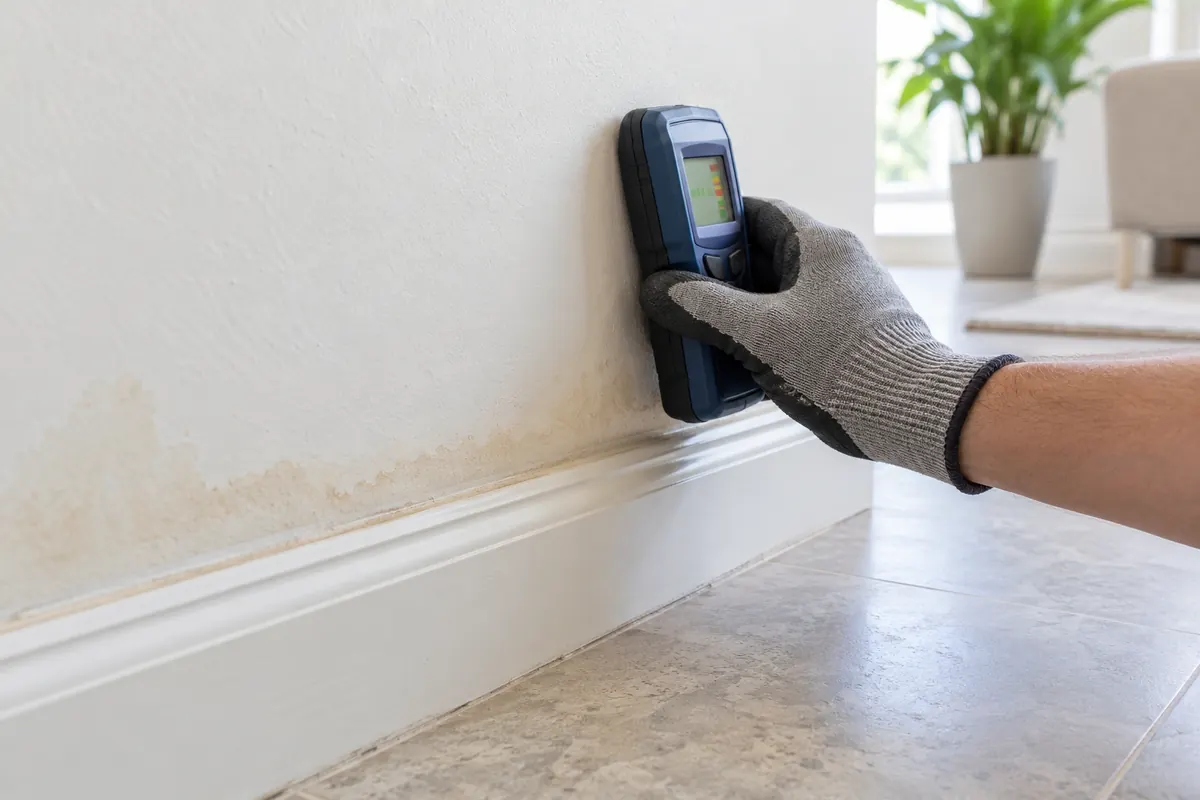
A specialist may begin with a visual inspection, moisture readings and separate checks of accessible plumbing. Acoustic listening can help investigate pressurized leaks. Thermal imaging identifies surface temperature patterns; it cannot see through a wall or prove that a pipe is leaking on its own. A moisture meter or other testing may be needed to confirm a suspected wet area.
The aim is to narrow the search and explain the evidence. Some situations still require access openings. Ask what the proposed method can establish, what it cannot rule out and whether any opening needs your approval first.
Prepare the room and the information
Move belongings away from the affected area if it is safe, keep photographs of changes and note which fixtures were in use. In a condominium, tell the building manager if water may be traveling from another unit or a shared line. The specialist may need access above, below or beside the visible damage.
For properties near the Shops at Merrick Park, our Merrick Park area guide explains how to prepare unit details and access information. You can also start with the broader Coral Gables leak detection guide if you are unsure which system is involved.
What affects the inspection cost?
The number of affected rooms, accessibility, need for separate supply or drain tests, and requested written documentation can change the scope. Ask whether the initial charge includes all testing or only an assessment. Wall opening, pipe repair, drying and finish restoration may be separate services.
Describe spreading moisture when you call. If water is near electrical equipment or a ceiling appears unstable, keep people away and seek appropriate urgent assistance. Describe these hazards before anyone enters the affected space.
Give the stain a useful history
Take one wider photo that shows the room and one closer photo of the mark. Note the date, the nearest fixture and whether the area changes after a shower, laundry cycle or rainfall. Describe the pattern without deciding the cause in advance.
A ceiling stain in a condo may need access to the unit above. A dry reading at one visit may not settle an intermittent problem. A useful finding says where moisture was measured, which plumbing was checked and what still needs investigation.
Use the printable leak observation worksheet to keep the notes together before your call.
Questions about hidden water leak detection
Can a leak exist without a high water bill?
Yes. Small or intermittent leaks may not create an obvious billing change, and drain leaks happen only when the drain is used. Moisture can also come from a source other than a water-supply pipe.
Will thermal imaging find every hidden leak?
No. It shows surface temperature differences, which can have several causes. Conditions, materials and access affect results; confirmatory testing may be needed.
Does detection include repairing the wall?
Not necessarily. Ask the inspection specialist to separate detection, access openings, plumbing repair and finish restoration in the written scope.
Further reading: Miami-Dade Water and Sewer leak detection tips and our content sources and approach.