
Signs worth discussing on the call
- A water level that needs repeated unexplained top-ups
- Water loss that changes when the circulation pump runs
- Dampness around equipment or a recurring wet deck area
- A persistent issue after obvious equipment drips are addressed
These observations guide an investigation; they do not confirm the source by themselves.
Record water loss before assuming the cause
Evaporation, rainfall, splash-out, backwashing and an automatic fill system can all affect the water level you observe. Keep a brief record of weather, pool use, top-ups and equipment operation. Avoid relying on a universal daily water-loss threshold.
Tell the specialist whether the water drops with the pump running, with it off, or in both situations. Ask for safe observation instructions for your pool setup. Do not drain the pool as a leak test or run equipment with an unsafe water level.
What a pool inspection may include
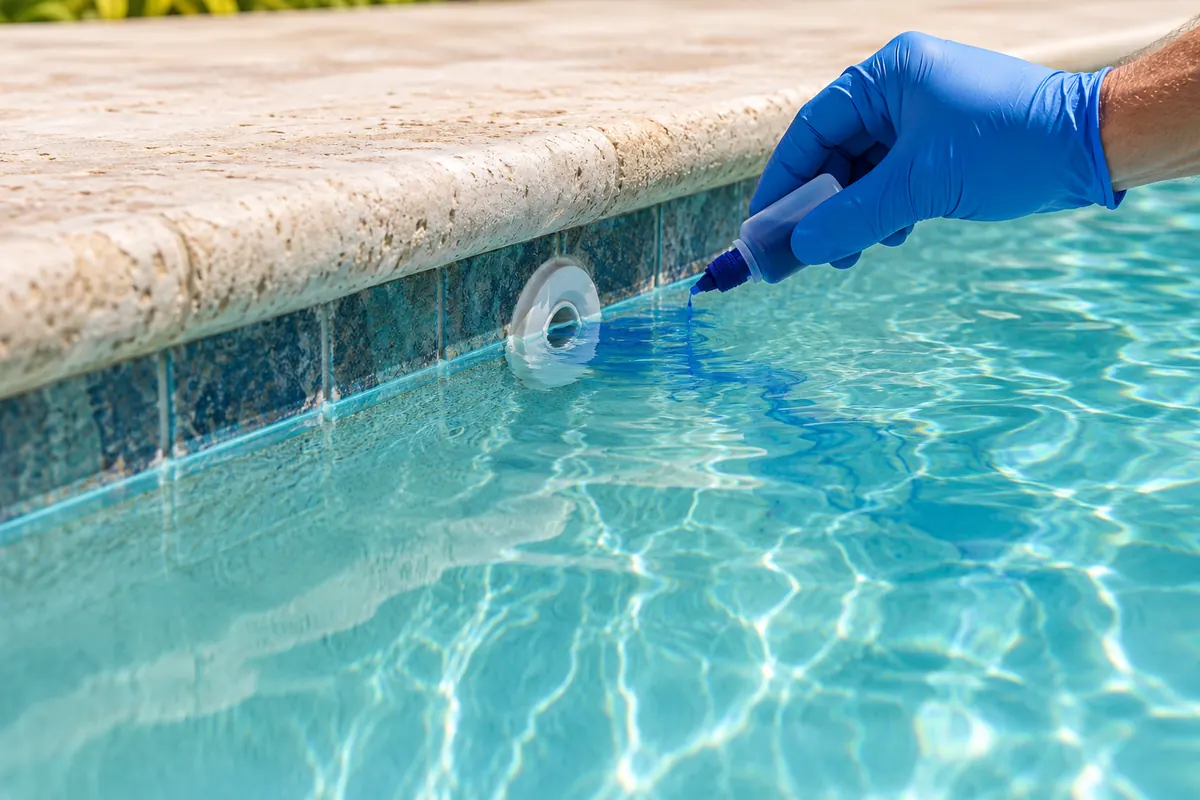
A specialist may visually inspect the equipment pad, check fittings and accessible penetrations, use dye testing at a suspected entry point, and pressure-test suitable plumbing sections. Acoustic methods may be useful for some concealed line leaks. The scope should distinguish the pool shell and fittings from suction, return and other connected lines.
Pool plumbing is a separate system from household supply piping. For unexplained water use elsewhere on the property, review underground water-line detection rather than assuming all water loss has the same cause.
Help the specialist plan the inspection
Describe the pool type, attached spa or water features, automatic fill equipment and when the problem began. Arrange safe access to the equipment pad and explain any access restrictions. Ask the specialist whether the current water level is suitable for the planned inspection.
For properties in the Biltmore area, discuss pool-deck and garden access before scheduling. If you have several possible leak sources, our Coral Gables water leak detection guide explains how to describe the situation on the first call.
Compare inspection scope, not just a headline price
Pool size alone does not determine cost. Connected features, number of plumbing circuits, access, testing time and the need for specialist equipment matter too. Ask whether a quote covers the shell, fittings, equipment and all relevant plumbing or only one part.
Detection, underwater repair, pipe work and deck restoration may require separate arrangements. Confirm what written findings are provided, whether repairs are offered and whether a return visit has an additional charge. Ask about the next available inspection appointment.
Keep a short pool observation log
Record the water level from the same visible reference point, along with the time, rain, top-ups and whether the circulation equipment was operating normally. Note any attached spa, water feature or automatic fill. Comparing observations made under different conditions can be misleading.
Use the notes to describe the problem, not to select a repair yourself. A useful report separates the shell and fittings from the suction, return and other lines that were actually tested. It should also identify any parts of the system that could not be assessed. Do not drain the pool or run equipment at an unsafe water level as a test.
Use the printable leak observation worksheet to keep the notes together before your call.
Questions about pool leak detection
Does water loss mean the pool shell is cracked?
Not necessarily. Fittings, equipment or plumbing can be involved, and weather or pool use can affect the level. The inspection should evaluate the relevant possibilities.
Should I turn off the automatic fill?
Ask the pool specialist how to make a useful and safe observation for your setup. Automatic filling can hide water loss, but equipment must not operate at an unsafe water level.
Can a pool leak and a house leak be checked together?
Only if the specialist offers both scopes. Describe both concerns before booking and confirm whether separate specialists or separate charges are needed.
Further reading: Miami-Dade Water and Sewer leak detection tips and our content sources and approach.