
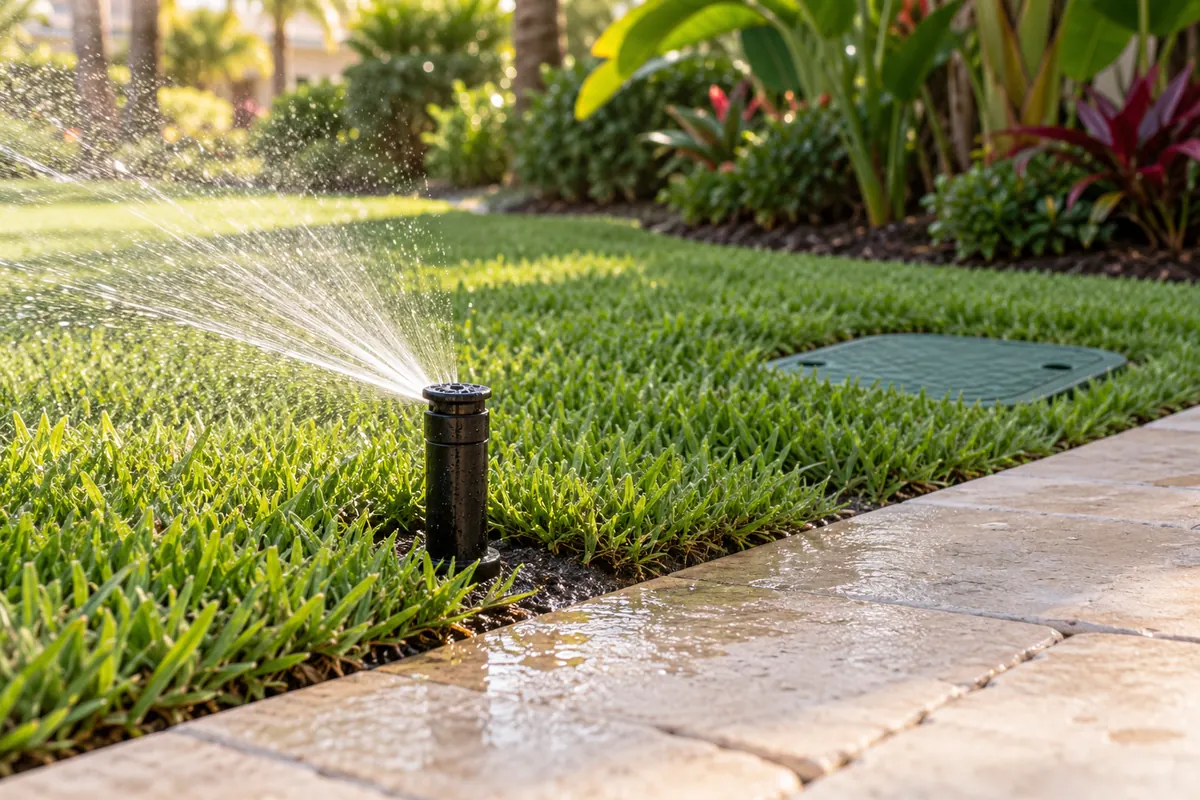
Signs worth discussing on the call
- A sprinkler zone with weaker flow than usual
- A wet patch that appears during a watering cycle
- Water seeping near a valve box
- A zone that continues releasing water after its cycle
These observations guide an investigation; they do not confirm the source by themselves.
Identify when the problem appears
Start with the controller schedule and your observations. Overlapping programs, seasonal changes or a head spraying onto hardscape can increase water use without a broken underground line. A soggy patch only while one zone runs points to a different inspection path than water escaping all day.
Note the zone number, time of day and whether the area dries between cycles. If water use continues when irrigation is not operating, describe that too. The specialist may need to investigate a valve or supply section rather than only the sprinkler heads.
A zone-by-zone inspection
A specialist may check the controller, observe accessible heads, inspect valve boxes and isolate sections to compare performance. Pressure or flow checks can help narrow a suspected problem. The method depends on whether the system uses the household supply, a separate meter or another source.
Where the issue may involve the main buried supply, underground leak detection can be relevant. Explain the irrigation arrangement when you call; do not assume every leak detection specialist also repairs controllers or sprinkler equipment.
Prepare access without disturbing the system
Have controller instructions or a zone map ready if available. Clear a safe route to accessible equipment and describe locked gates, pets or restricted areas. Keep photos of wet patches and damaged heads. Avoid probing or digging near unidentified buried services.
The Granada area guide covers separating indoor and landscape symptoms. Around the University area, owners and tenants should agree on who can approve access and changes. Our main local leak detection guide can help if the source is still unclear.
What influences irrigation investigation cost?
The number of zones, property access, pipe-routing information and whether the problem is intermittent all affect the visit. Ask if the quote includes testing each zone or only the reported problem area. Controller adjustment, valve replacement and trenching may be priced separately.
If a zone has a visible ongoing leak and you know how to safely disable that zone, avoid running it until it can be assessed. Use the specialist’s guidance for unfamiliar equipment or shared systems rather than changing valves by trial and error.
Describe the zone, not just the puddle
If you know the controller zone number, record it beside a photo of the affected area. Note whether the wetness appears only while that zone runs, remains after the cycle, or continues when scheduled watering is off. Include recent changes to the timer or sprinkler heads.
These observations help separate a head or fitting issue from a valve, lateral line or supply concern. They do not confirm the fault. The findings should identify the zone and component investigated, rather than simply saying that the lawn was wet.
Use the printable leak observation worksheet to keep the notes together before your call.
Questions about irrigation leak detection
Does a weak sprinkler always mean a pipe leak?
No. A clogged or damaged head, valve issue or supply problem can also reduce flow. Comparing the affected zone with other zones helps guide the inspection.
Can irrigation explain a high household water bill?
It can if the system uses the billed water supply. A separate meter or other source changes how usage appears, so bring that information to the call.
Do I need a leak detector or a sprinkler repair company?
A visible broken head may be a straightforward sprinkler repair. Persistent unexplained loss or a suspected buried pipe failure may need a more focused diagnostic visit. Confirm the specialist’s capabilities.
Further reading: Miami-Dade Water and Sewer leak detection tips and our content sources and approach.